
Walmart will soon let AI agents shop for you. Its new Agent Gateway lets ChatGPT, Gemini, and Meta’s Muse search products. They can buy them at Walmart and Sam’s Club.
A new Agent Profiles feature lets you set spending limits and approve every order. Walmart is moving in the opposite direction of Amazon, which has been blocking AI agents from its site.
What happened
On October 21, 2026, Walmart announced two new tools that let AI agents buy things for you. The news came from Walmart’s president and CEO, John Furner. He shared it at the Masters of Scale Summit in San Francisco.
Both tools focus on “agentic shopping.” That means an AI assistant does online tasks for you. You could soon ask ChatGPT or Gemini to do your shopping. The agent would search Walmart, pick the items, and complete the order.
What is the Walmart Agent Gateway?
The first tool is called the Walmart Agent Gateway. It is already live. It works like a special door for AI agents. Approved AI assistants can connect through this door to Walmart and Sam’s Club systems.
The Gateway is built on the Model Context Protocol, or MCP. Anthropic created this open standard. It lets AI agents safely connect to outside tools and data. With it, an AI agent can search Walmart’s full online stock. It can then buy products on your behalf.
Three popular assistants are named as partners. They are OpenAI’s ChatGPT, Google’s Gemini, and Meta’s Muse. Walmart had already worked with Muse before. It also offered links with ChatGPT and Gemini. Now all of them can connect in a deeper way.
One smart part of the design is privacy. The Gateway can help you reorder your usual brands. You can do this without sharing your personal data with the agent. Your purchase history stays with Walmart. The agent only sees what it needs for the task.

Agent Profiles: your AI shopper gets its own account
The second tool is called Agent Profiles. Walmart says it will roll out next month. It solves a simple problem. Right now, an agent shops as if it were you. Its orders mix in with your own orders. That makes them hard to track.
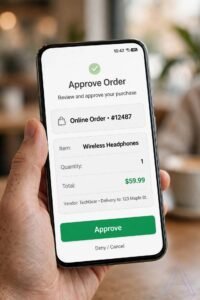
Agent Profiles give each AI agent its own profile inside your Walmart account. The profile is created the first time you use an agent through the Gateway. You link it by signing in to your Walmart account. After that, you can see every purchase the agent makes, kept separate from yours.
You also control how much the agent can spend. There are two simple options. You can approve every single transaction by hand. Or you can set a spending limit and let the agent work inside it. Walmart gives examples like fifty dollars, one hundred dollars, or two hundred dollars. You can remove a profile at any time. You can also take back an agent’s access in one click.
Walmart compares this to adding an authorized user to a credit card. The agent gets limited power, and you stay in charge. You do not need a paid Walmart Plus membership. Every Walmart account holder can use these tools.
Safety rules for AI shoppers
Walmart has set clear rules for agents. These rules protect shoppers.
First, agents cannot see your payment card data. They never touch your card numbers. Second, an agent must follow Walmart’s rules. If it breaks them, Walmart can block it. Third, the agent sees the same prices you would see. Walmart says it prices products, not people. Offers and fees are shown before any purchase is made.
If something goes wrong, the normal returns process still works. This applies even if the agent did not do what you asked. You can track every agent purchase separately. And you can require your approval before any order is placed.
Wall Street noticed the news too. In his note, analyst David Bellinger of Mizuho called this “a real thing.” He added that strong backing from top teams is behind it.
Walmart opens the door while Amazon locks it
This launch puts Walmart in a sharp contrast with Amazon. Amazon has been blocking AI agents from buying on its site. Some travel and booking sites have done the same. They do not want bots making purchases for shoppers.
Walmart is taking the opposite path. It is inviting AI agents in. It is building special systems to manage them safely. The company believes AI agents will soon become a normal way to shop. It wants to be ready when that happens.
This is not Walmart’s first step in this direction. The company has been pushing hard into AI-enabled shopping for months. Its partnership with Meta’s Muse came earlier. The Agent Gateway now makes those connections much stronger.
Why this matters for freelancers and students
AI shopping agents can save real time. Think about a freelancer who runs a small online shop. She needs packing supplies every month. Instead of placing the order by hand, she can tell her AI agent to do it. She sets a spending limit of one hundred dollars. The agent orders the same supplies each month. She approves or checks the order when she wants.
Students can benefit too. A student living in a hostel can ask an agent to compare prices on books or study gear. He sets a low limit, like fifty dollars. The agent searches Walmart and shows the best options. The student picks one and approves the purchase. Nothing gets bought without his say-so.
Small business owners can use the same trick for stock. A shop owner who needs regular supplies can let an agent handle repeat orders. The spending limit keeps costs under control. The separate profile keeps business buys easy to track.
The bigger picture is about agentic commerce. This is a growing trend where AI assistants do shopping tasks for people. Google has moved in this direction too, with its Universal Cart for AI-powered shopping. Walmart is now one of the first big retailers to open its doors wide. If it works well, other stores will likely follow.
What to watch next
Agent Profiles roll out next month. That is when shoppers will get full control over their AI helpers. Watch how many people try it. If shoppers trust it, the idea of AI shopping will grow fast.
Also watch Amazon. It has blocked AI agents so far. Walmart’s open-door policy puts pressure on Amazon to answer. The two giants are now on opposite sides of this debate.
For now, the message is clear. Walmart wants your AI agent as a customer. And it wants you to feel safe letting it shop. It joins a fast-moving race of proactive agents. Anthropic’s Claude Duet is one example. These agents do work for you instead of waiting for your questions.