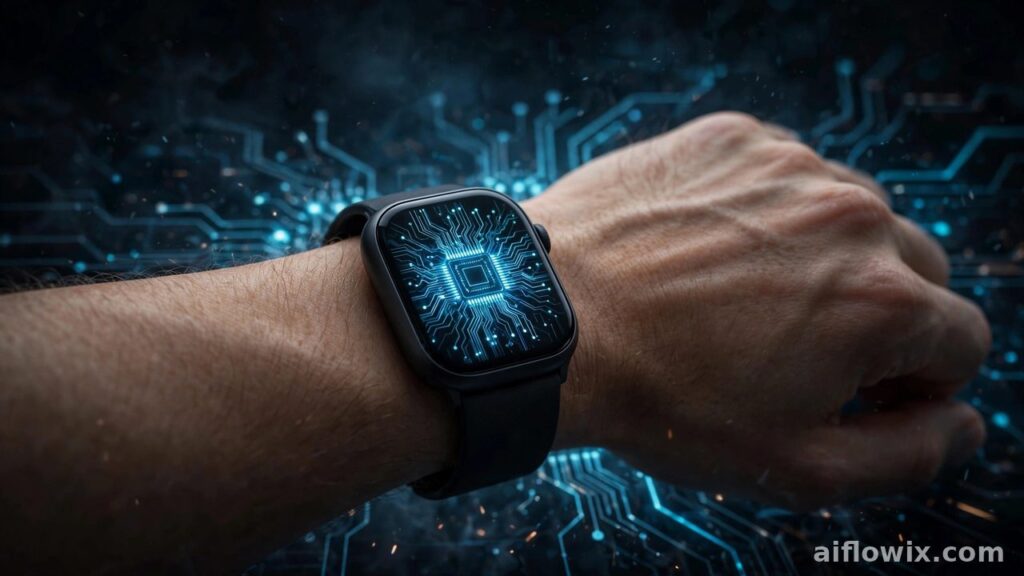
Google’s New “Astra” Edge AI Chip Could Bring Smarter Wearables
Summary: Google Research has previewed a new line of low-power AI chips called “Astra.” The chips are built with Synaptics and will run AI directly on wearables like smartwatches. They promise faster answers, longer battery life, and more private on-device processing.
What happened
Honestly, Google picked a good week for a surprise. On October 14, 2026, Google Research pulled back the curtain on a new line of low-power AI chips called “Astra.” The reveal happened at the company’s annual Research@ event at its headquarters in Mountain View, California. News of the announcement broke the next day, on October 15, 2026.
Google isn’t building this one alone. The chip is co-developed with Synaptics, a chip company. It runs on the M2 — the successor to Google’s Coral NPU, which first showed up in 2025 as the company’s AI compute engine. And here’s the headline number: the new M2 uses 40 percent less energy than existing products.
However, full technical details are still under wraps. But the goal is plain to see. Google wants AI to run right on small devices like smartwatches — instead of sending that work off to far-away cloud servers every single time.
What is “edge AI”?
Let me explain it the simple way. Right now, when you ask your phone a question, your voice travels to a big data center. Then the data center works out the answer and sends it back to you. That round trip takes time. And it means your data leaves your device.
Edge AI flips that around. The AI runs right on your device, at the “edge” of the network. Think of a smartwatch that handles your questions on the spot, without calling home for every little task.
Faster answers, for one thing, since nothing has to travel. Your personal data stays on the device, which cuts the risk of it leaking — and what you say is processed right where you are. Not in the cloud. Right there on your wrist.

Of course, there is a hard limit. These chips have to sip power, since a smartwatch battery is tiny. They also can’t run hot. Nobody wants a burning watch strapped to their wrist.
What caught my eye was Google’s answer to that wall. Avinatan Hassidim, the vice president of Google Research, put it this way: “Conventional edge chips are slow and use too much energy, making an always-on (ambient) AI experience impossible.” The Astra line is Google’s answer to that problem.
What the chip is expected to do
So what will this chip actually do? Google says it will handle voice, video, motion, and context detection in real time. And all of it happens right on the wearable device itself.
I’ll paint you a quick picture. Your watch understands your voice with almost no delay. It reads your gestures as you move around. It notices what you’re doing and offers help at just the right moment.
That kind of “always-on” help doesn’t exist today. Today’s chips are simply too slow and too hungry for power. But if Astra lives up to its promise, that could change soon.
Google isn’t the only one chasing this idea. OpenAI’s Dots assistant is built around the same thinking — an AI that is ready whenever you are. You can read more about it in our OpenAI Dots always-on AI assistant launch story.
Why it matters for freelancers and students
I’ll be straight with you: if you work as a freelancer, your time is literally your income. A smarter watch could save you small minutes all day long. Set a reminder by voice while dinner is cooking. Answer a client message with a few spoken words. Translate one sentence mid-call with a foreign client. And none of it needs your phone or the cloud.

And there’s a quieter win here: privacy. Freelancers handle client data every single day — files, messages, voice notes. A lot of that stuff is sensitive. With edge AI, more of your data never leaves your own device. Fewer copies floating around means a smaller chance of a leak.
Students get something too. Picture a watch that helps you practice a new language out loud. Or one that reads your notes back to you during a walk. A fast, private voice helper could make your study breaks a whole lot more useful.
One more thing: Google has had a busy year with AI releases. The company launched Gemini 4 Argon earlier this year. Rivals aren’t sitting still either. ChatGPT’s new intelligent UI is another sign of where the field is heading.
What to watch next
So what’s next? Synaptics will share detailed specs and a live demo at its own event on October 20. That’s when we’ll learn how powerful this chip really is.
Rahul Patel, the CEO of Synaptics, dropped one strong hint about the future. He said: “This chip won’t stay in the lab and will also be built into Google devices.” He didn’t say which devices, though. Or when. Google hasn’t said anything about that either.
The smart move right now is to wait for the October 20 demo. If the chip does what Google claims, the next generation of wearables could feel very different.
Also shown at the Research@ event
The Astra chip wasn’t the only thing Google showed off. Three other projects stood out at the same event:
- Google Earth AI — predicts the global environment and public health.
- Deep Review — checks the logic and factual accuracy of technical documents.
- TimesFM — a model that forecasts time-series data, like trends over days or months.
Google hasn’t said yet when these tools will reach the public. But they all point in the same direction. AI is moving from the cloud to your wrist — and beyond.
Source: report on the announcement at biz.chosun.com